 sql_thegoals360_
There are nights when a stadium feels alive in the purest sense — not just loud, but meaningful. Moments when history, rivalry, and expectation collide, and every chant carries weight. English grounds have long been defined by their voices, inspiring, intimidating, and uniting generations. Yet the line between passion and provocation is delicate, and once crossed, it can shape how a club is perceived far beyond ninety minutes.
Leeds United, a club forged on identity, intensity, and defiance, knows this better than most. Its supporters are celebrated for creating atmospheres that rattle opponents and empower their own. But that same fervour has occasionally drawn scrutiny — instances where the noise overshadows football, and reputation becomes as debated as results.
That tension was starkly evident during Leeds’ 1–1 draw with Sunderland at the Stadium of Light. Sunderland opened the scoring through Simon Adingra midway through the first half, only for Dominic Calvert-Lewin to equalise shortly after the restart. On the pitch, the game was tightly contested, emotional, and physical, as expected from two ambitious sides. But as the second half progressed, attention shifted from tactics to the stands.
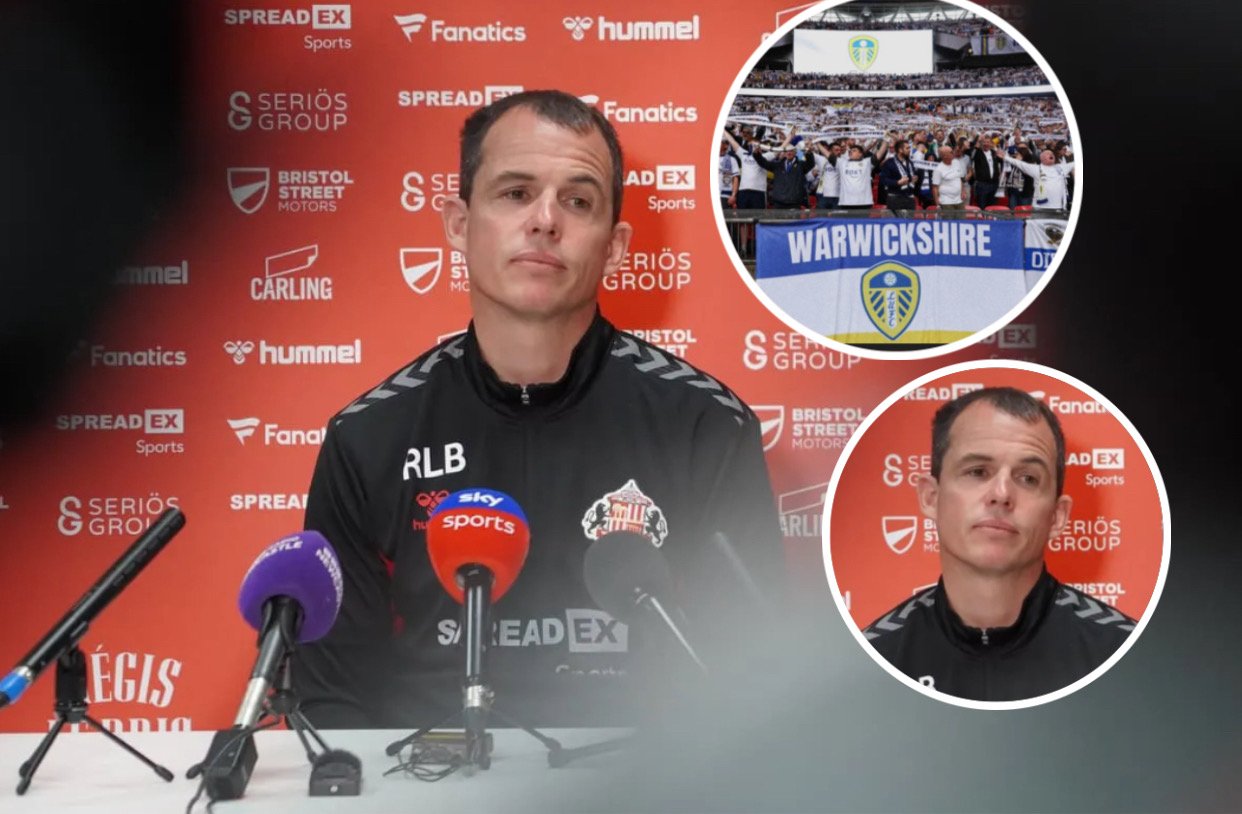
Sunderland manager Régis Le Bris did not mince words after the final whistle. Visibly furious, he condemned a chant from sections of the Leeds support as “unacceptable,” insisting it altered the match’s emotional balance.
“WTF is that chant?” Le Bris said bluntly.
He continued with a warning that echoed across English football:
“This is not passion. This is not rivalry. If this continues, no club will ever respect Leeds United again.”
Le Bris argued the chant destabilised the game, turning a calm, controlled contest into something charged and volatile.
“We were calm, playing our football. Then suddenly everything changes. Emotions rise, players react, referees feel pressure. The game becomes something else entirely,” he explained.
While he declined to repeat the chant publicly, his stance left a clear message: the episode crossed accepted boundaries, threatening respect and credibility. Reaction was divided. Leeds fans voiced both defiance and concern, while Sunderland’s dressing room reportedly backed their manager entirely.
Ultimately, a contest that should have been remembered for resilience and competitive spirit has been overshadowed by controversy. For Leeds United, it raises questions not about passion, but perception. For Régis Le Bris, the warning was unambiguous: when the noise eclipses the game, everyone loses — and respect, once eroded, is far harder to reclaim than three points.

 sql_thegoals360_