sql_thegoals360_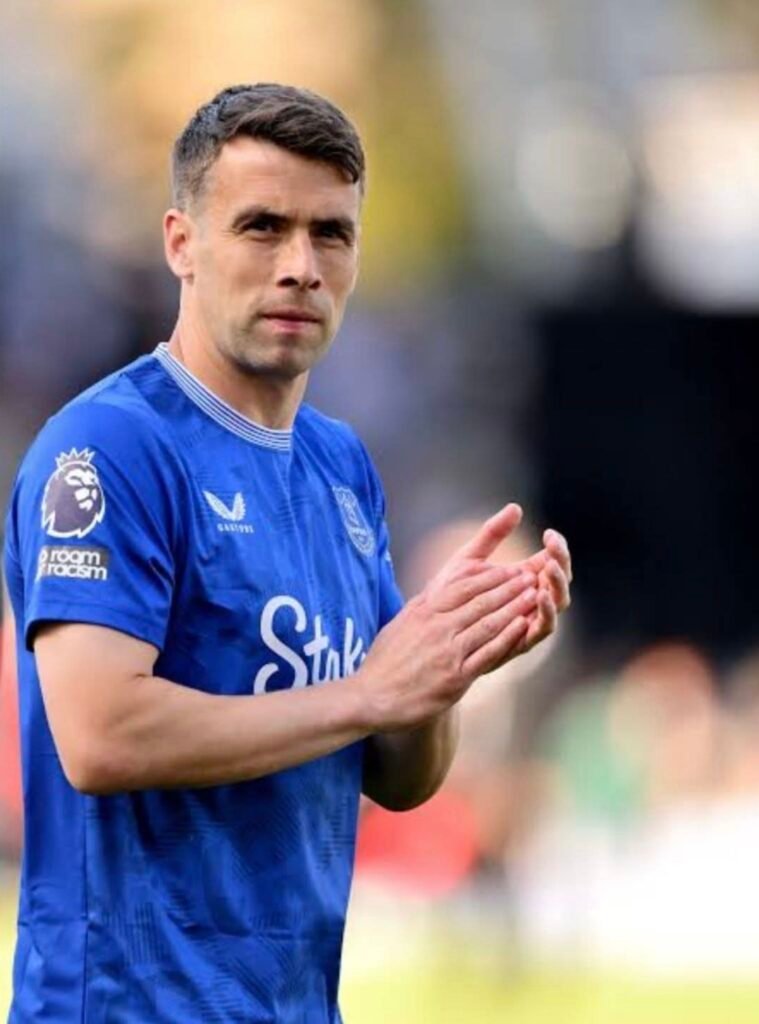
Some stories are not measured in numbers, nor settled in boardrooms heavy with calculation. They live instead in the quiet, unspoken bond between place and person — in the echo of footsteps through generations, in the weight of expectation passed from one era to the next. There are institutions that do not merely exist to win, but to endure; to carry something deeper than silverware, something that cannot be priced or traded away.
On the banks of the Mersey, that feeling has long defined a football club whose identity is stitched together by resilience, defiance and belonging. Everton F.C. is not simply followed — it is inherited. Its history is built on figures who understood that wearing the shirt meant more than performing; it meant standing for something. And in a time when the game often feels untethered from those ideals, one decision has cut through the noise with startling clarity.
COLEMAN REJECTS MILLIONS IN STUNNING ACT OF LOYALTY THAT SHAKES MODERN GAME
Séamus Coleman has turned his back on a lucrative move to Saudi Arabia, choosing instead to remain at the club he has called home for more than a decade. In doing so, the Everton captain has delivered a moment that feels increasingly rare — a decision rooted not in finance, but in feeling.
The 35-year-old’s journey from Sligo Rovers to Merseyside in 2009 is one that has come to define an era. Signed for a modest fee, he arrived with little fanfare. What followed was a rise shaped by persistence, humility and an unbreakable sense of duty. Seasons have changed, managers have come and gone, yet Coleman has remained — constant, reliable, and fiercely devoted.
The offer placed before him was, by all accounts, extraordinary. At this stage of his career, few would have questioned a departure. Yet those closest to the situation suggest the decision, while difficult, was guided by something far more powerful than money — a connection that cannot be replicated elsewhere.
“I’d go through walls for Everton.”
That declaration, simple yet profound, has echoed across Merseyside. It speaks to a relationship built over years of shared struggle and belief, a bond strengthened not in moments of ease but in periods of adversity.
Inside the club, there is a quiet understanding of what this means. Manager David Moyes is believed to hold Coleman in the highest regard, valuing not only his presence on the pitch but his influence beyond it. Younger players look to him not just for guidance, but for an example of what it truly means to belong.
“There are offers you consider, and there are places you simply cannot leave.”
Supporters have responded with emotion that borders on reverence. For many, Coleman represents a fading ideal — a player who chose the weight of history over the lure of wealth, who understood that some commitments are not meant to be broken.
“This club gives you something money never can — a reason to stay.”
As Everton continue their search for stability and renewal, this moment may come to stand as something far greater than a rejected transfer. It is a reminder, quietly defiant, that even now, in the modern game’s most restless era, loyalty can still endure — and when it does, it resonates louder than any deal ever could.

 sql_thegoals360_